Mistakes are visible before they are expensive
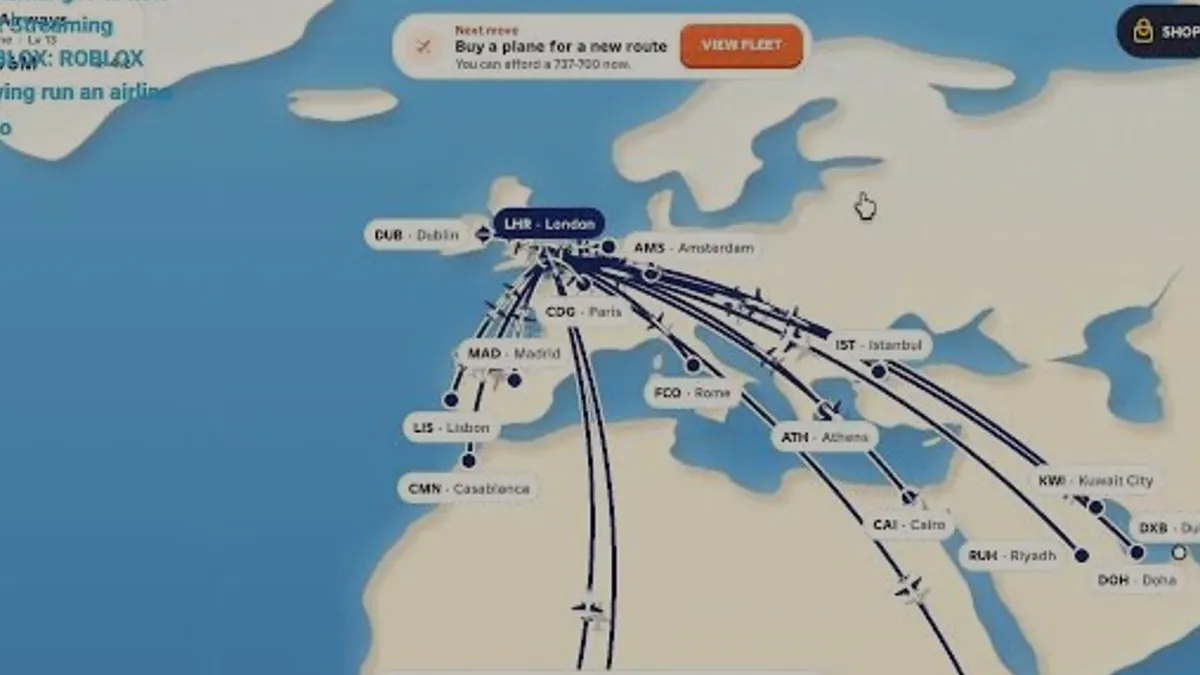
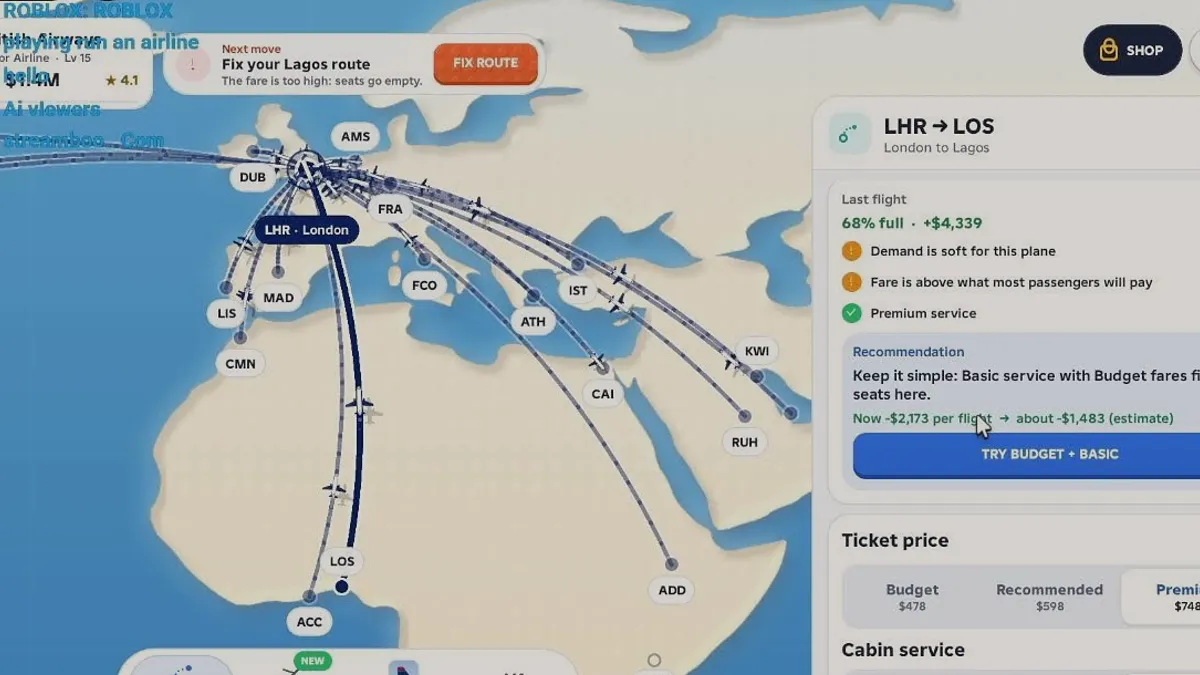
Run an Airline is fairly direct about failure. A route that is losing money gets a red banner on the map, the route card lists the specific issues, and the recommendation states an estimated result after the fix. Most costly mistakes are decisions taken without opening that card.
The reviewed London–Lagos route is the clearest example: 68% full with a positive last flight, and still flagged because the fare sat above what most passengers would pay. A player who only looked at the cash figure would have missed the warning entirely.
Eight mistakes, in order of cost
- Buying a larger aircraft before the current one fills — extra seats lower the load factor instead of raising revenue.
- Setting the premium fare on a route with soft demand, which is exactly what the Lagos warning described.
- Running premium cabin service on a route that cannot fill, at $20 per seat instead of $3.
- Changing fare and service together, so the next result cannot be attributed to either.
- Opening several routes at once and reading none of them.
- Judging a route by cash per flight instead of cash per aircraft-hour.
- Spending the whole balance on an aircraft and leaving no cash for a fare experiment.
- Ignoring the Next move prompt, which names the action the game expects next.
Warning text and what it implies
| Target | What the card says | What it means | First fix |
|---|---|---|---|
| Demand is soft for this plane | Demand is soft for this plane | The route or the aircraft size is the limit | Try a smaller aircraft before cutting the route |
| Fare above what most passengers will pay | Fare is above what most passengers will pay | Price, not capacity, is limiting the cabin | Drop one fare tier and re-run |
| Premium service | Premium service (green check) | Service is not the problem | Leave service alone and change the fare |
Why capacity mistakes compound
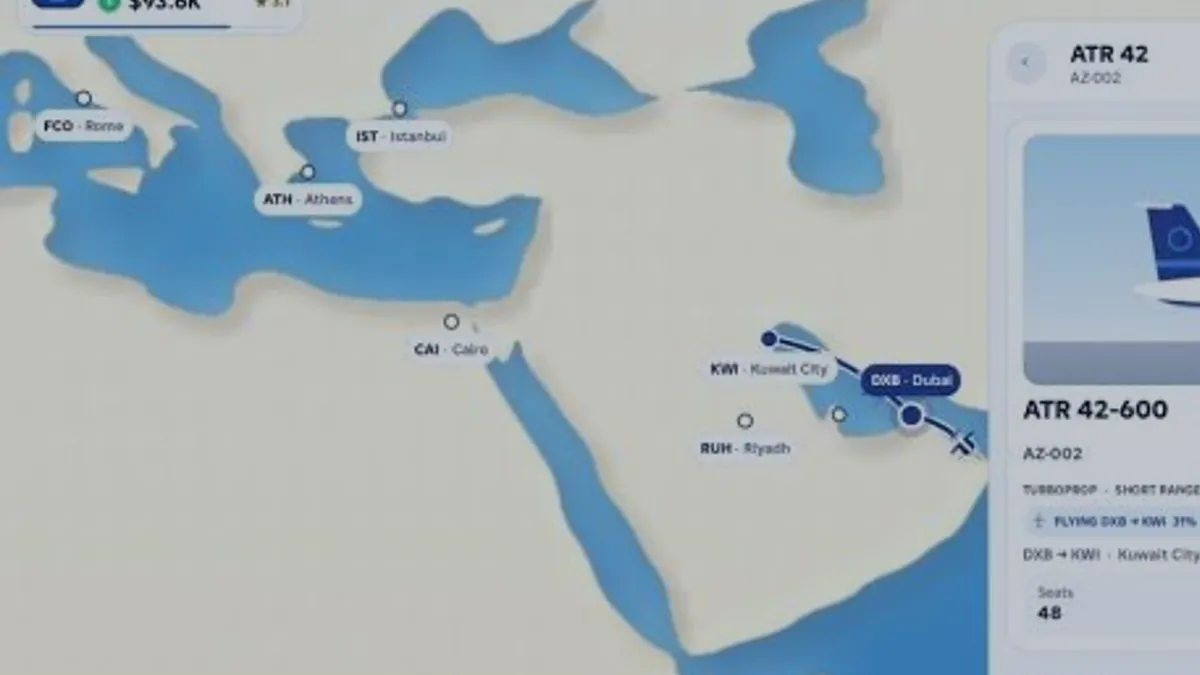
A larger aircraft multiplies every pricing error. If a 48-seat turboprop flies at 68% load, it carries about 33 passengers. Put a 150-seat jet on the same route at the same demand and the load factor falls to roughly 22%, so the same fare produces a worse flight and the aircraft is also locked up for longer.
That is why the fleet hint should be read as a suggestion, not an instruction. The game tells you what you can afford; it does not tell you that the route can fill it.
Mistake questions
What is the single most expensive mistake?
Buying capacity the route cannot fill. A bad fare costs the difference between two tiers on one flight; an oversized aircraft costs the purchase price plus a permanently lower load factor on every flight that follows.
Should I always use basic service?
No. Basic is $3 per seat against $20 for premium, so it is the cheap default while you are testing demand. Once a route fills reliably, the service tier becomes a rating and satisfaction decision rather than a pure cost decision.
Is a negative flight always a bad route?
Not always. A route can be negative while you learn its demand curve, and the game's own recommendation implies a fix exists. A route is only a mistake when two fare cuts and a service cut still leave it negative.
How do I avoid changing two things at once?
Write the setting you are testing on a note before you save. If the note has two items, revert one of them before the flight completes.
Sources and references
- Run an airline — official Roblox experience page
Supports the game identity, creator, release date, server size, genre and the published feature list quoted on this site.
Accessed - Roblox Games API — universe 10768550253
Supports visit count, favourites, active players, maximum server size, genre tags and the created/updated timestamps used in the snapshot table.
Accessed - Roblox votes API — universe 10768550253
Supports the 1,432 up / 208 down vote counts behind the 87.3% approval figure. Approval is computed, not published by Roblox.
Accessed - Roblox game passes API — universe 10768550253
Supports the six pass names and the effect wording quoted in the monetisation pages. It does not publish prices.
Accessed - Creator profile — monkeytherobloxdev
Confirms the creator account behind the experience. The profile itself carries no studio or support page.
Accessed - RUN AN AIRLINE FOR THE FIRST TIME:O — Zzzenvy
Public first-session recording used for the create-airline flow, the ATR 42-600 fleet panel (48 seats, 1,300 km, 500 km/h) and the DXB ↔ KWI 854 km / 3h example. Frame text only; no developer statement.
Accessed - ROBLOX playing run an airline — Krakenking17
Public live recording used for the LHR → LOS route card: fare tiers $478/$598/$748, 68% load, +$4,339 last flight, -$2,173 to -$1,483 recommendation, and cabin service at $3/$9/$20 per seat.
Accessed