Plan in this order
Distance, range, block time, demand, fare. Most players start at fare because it is the most visible number on the card, but fare is the last variable that matters: a sector the aircraft cannot reach has no fare, and a sector that takes six hours has far fewer chances to earn.
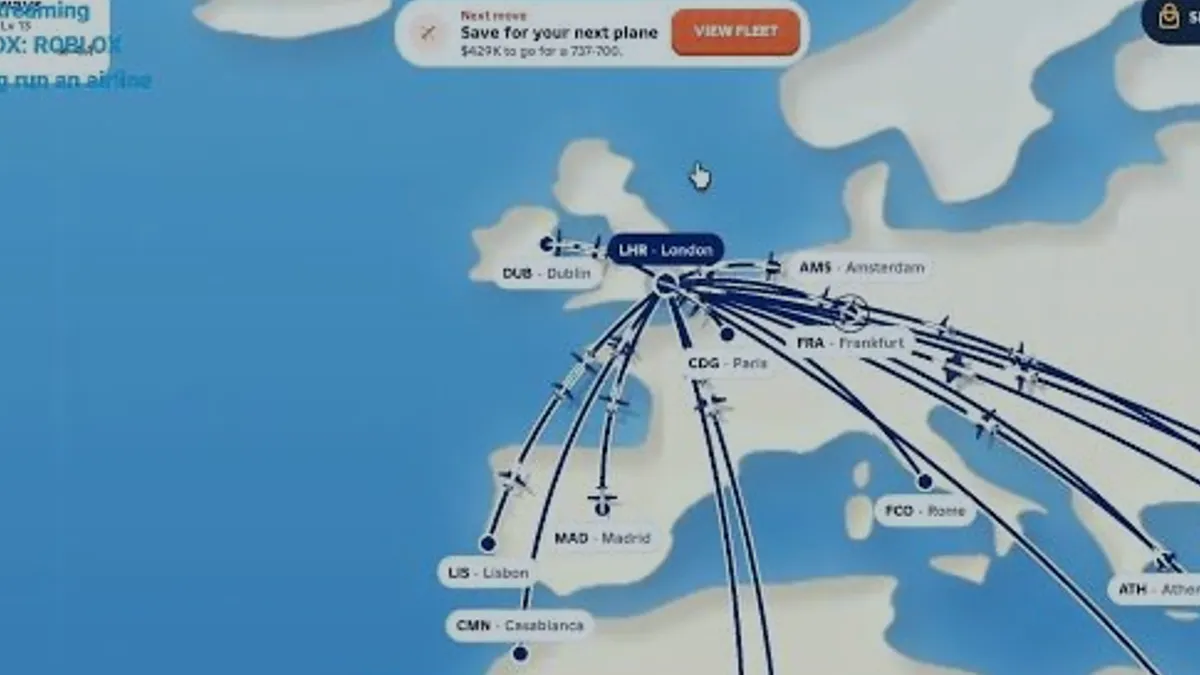
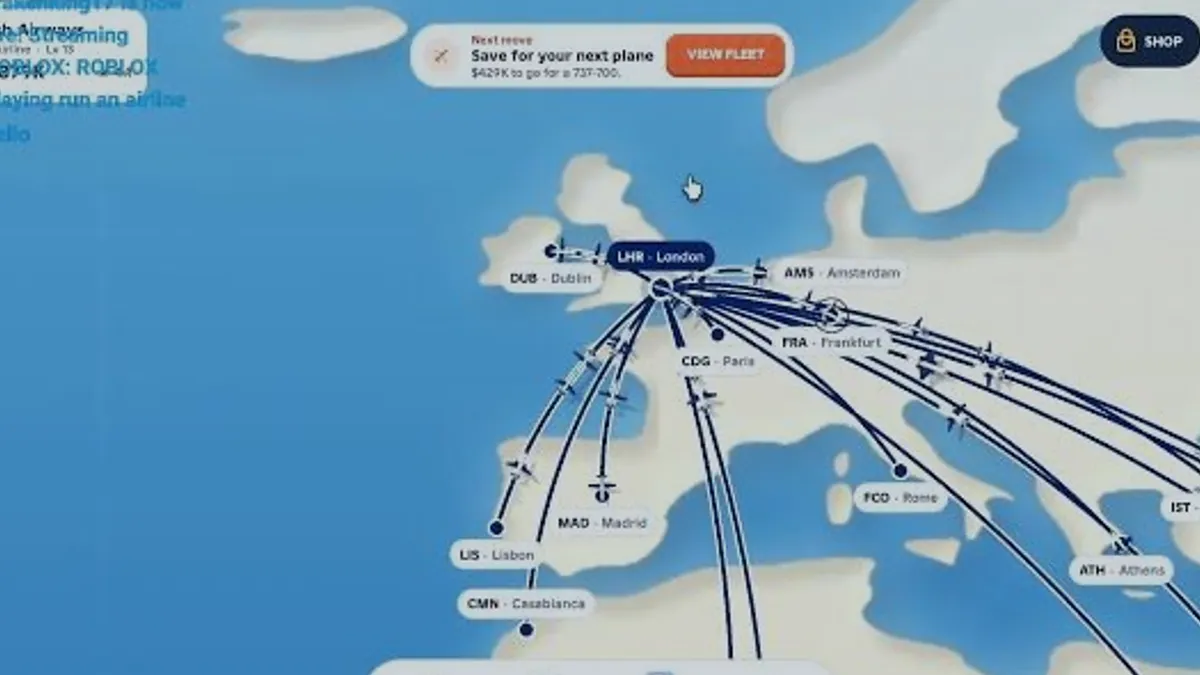
The map gives you distance and the fleet panel gives you range, so the first two checks need no experimentation at all. Only after a route passes both is it worth opening the card.
The four-step route filter
Read the sector distance
Open the destination and note the distance in kilometres.
Compare it with aircraft range
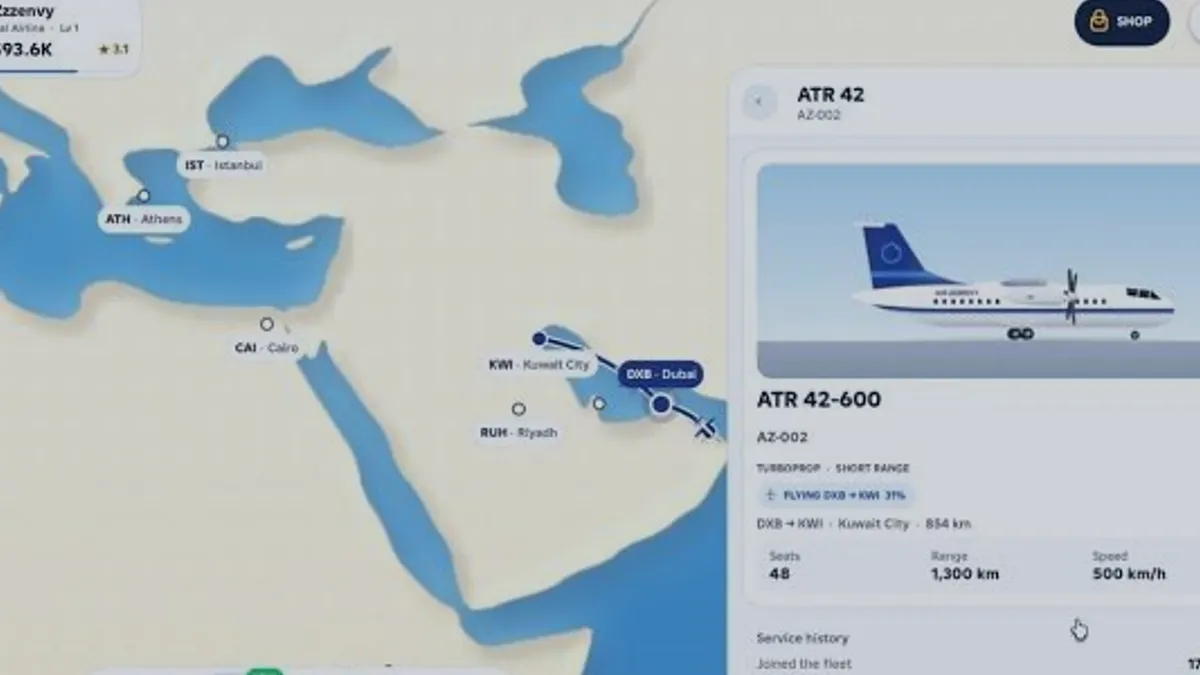
The ATR 42-600 is rated at 1,300 km, so anything beyond that needs a different aircraft.
Check the quoted block time
An 854 km sector quotes 3 hours; longer sectors scale up from there.
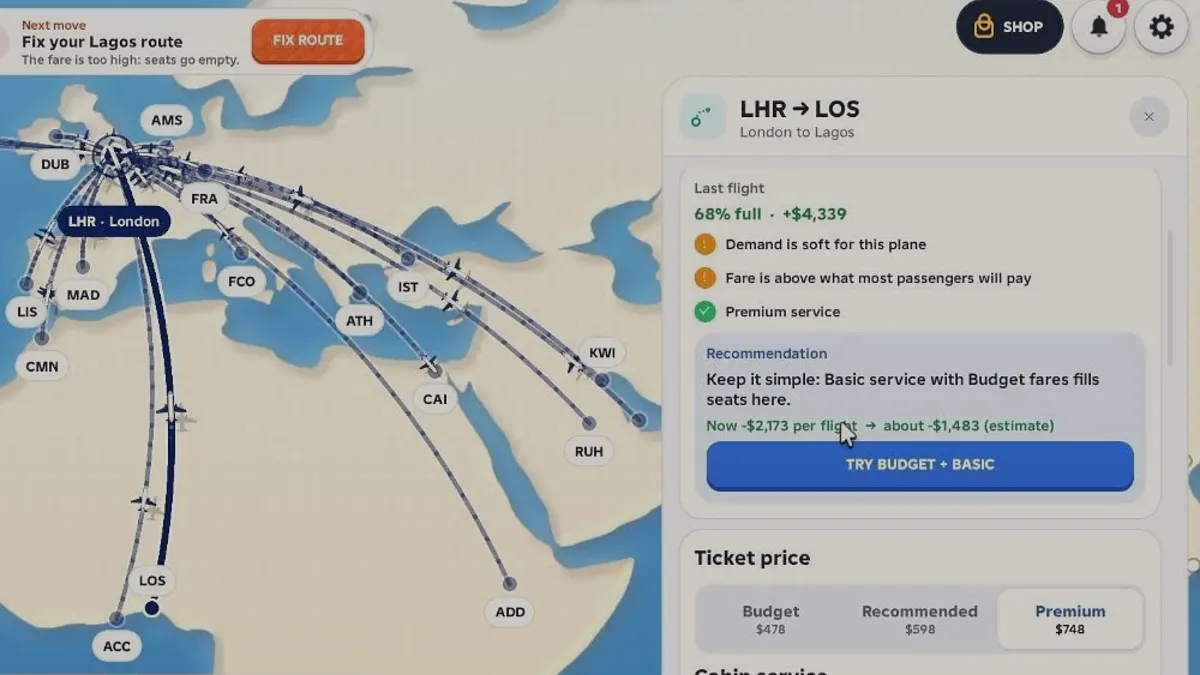
Only then read the fare tiers
A route that fails the first three checks should not be priced at all.
Route shapes and what they demand
| Target | Sector length | What it needs | Main risk |
|---|---|---|---|
| Regional international | ~900–2,500 km | Range plus fare discipline | Fare set above willingness to pay |
| Long-haul | 2,500 km and up | A jet and a long block time | Aircraft locked up for hours |
| Short feeder | Under ~900 km | Any short-range turboprop | Low revenue per flight |
Why block time changes the ranking
Two routes can post the same cash per flight and still be very different businesses. If one takes three hours and the other takes seven, the shorter route can fly more than twice as often with the same aircraft.
Divide the per-flight result by the quoted block time to get cash per aircraft-hour. That single division reorders most route lists, and it is the number the route comparison tool ranks by.
A route plan worth writing down
- The aircraft you are planning for, with its seats, range and speed.
- Two destinations inside range, with distance and quoted block time.
- The fare tier you will start with on each.
- The load factor you will treat as acceptable.
- The result that would make you close the route.
Route planning questions
How do I know a route's distance before opening it?
Selecting a destination shows the distance in kilometres on the route card, as the reviewed card did for DXB ↔ KWI at 854 km. Plan on that figure rather than on real-world geography.
Is a longer route always more profitable?
No. Longer sectors usually carry higher fares but also longer block times, and the aircraft earns nothing while it is in the air. Compare cash per hour, not cash per flight.
Should I connect two non-hub cities?
The map draws routes from your hub, and the reviewed sessions only show hub-to-destination lines. Point-to-point service outside the hub was not observed, so plan a hub-and-spoke network until your own client shows otherwise.
What is the Next move prompt telling me?
It names the immediate action the game expects, such as buying a plane for a new route or saving toward a specific aircraft. It is a prompt, not an optimisation, so check it against your route plan rather than following it blindly.
Sources and references
- Run an airline — official Roblox experience page
Supports the game identity, creator, release date, server size, genre and the published feature list quoted on this site.
Accessed - Roblox Games API — universe 10768550253
Supports visit count, favourites, active players, maximum server size, genre tags and the created/updated timestamps used in the snapshot table.
Accessed - Roblox votes API — universe 10768550253
Supports the 1,432 up / 208 down vote counts behind the 87.3% approval figure. Approval is computed, not published by Roblox.
Accessed - Roblox game passes API — universe 10768550253
Supports the six pass names and the effect wording quoted in the monetisation pages. It does not publish prices.
Accessed - Creator profile — monkeytherobloxdev
Confirms the creator account behind the experience. The profile itself carries no studio or support page.
Accessed - RUN AN AIRLINE FOR THE FIRST TIME:O — Zzzenvy
Public first-session recording used for the create-airline flow, the ATR 42-600 fleet panel (48 seats, 1,300 km, 500 km/h) and the DXB ↔ KWI 854 km / 3h example. Frame text only; no developer statement.
Accessed - ROBLOX playing run an airline — Krakenking17
Public live recording used for the LHR → LOS route card: fare tiers $478/$598/$748, 68% load, +$4,339 last flight, -$2,173 to -$1,483 recommendation, and cabin service at $3/$9/$20 per seat.
Accessed