What the card shows
The airline card sits in the top-left of the map screen. It carries the airline name, a level number, a tier label such as Major Airline, the current cash balance and a star rating to one decimal place.
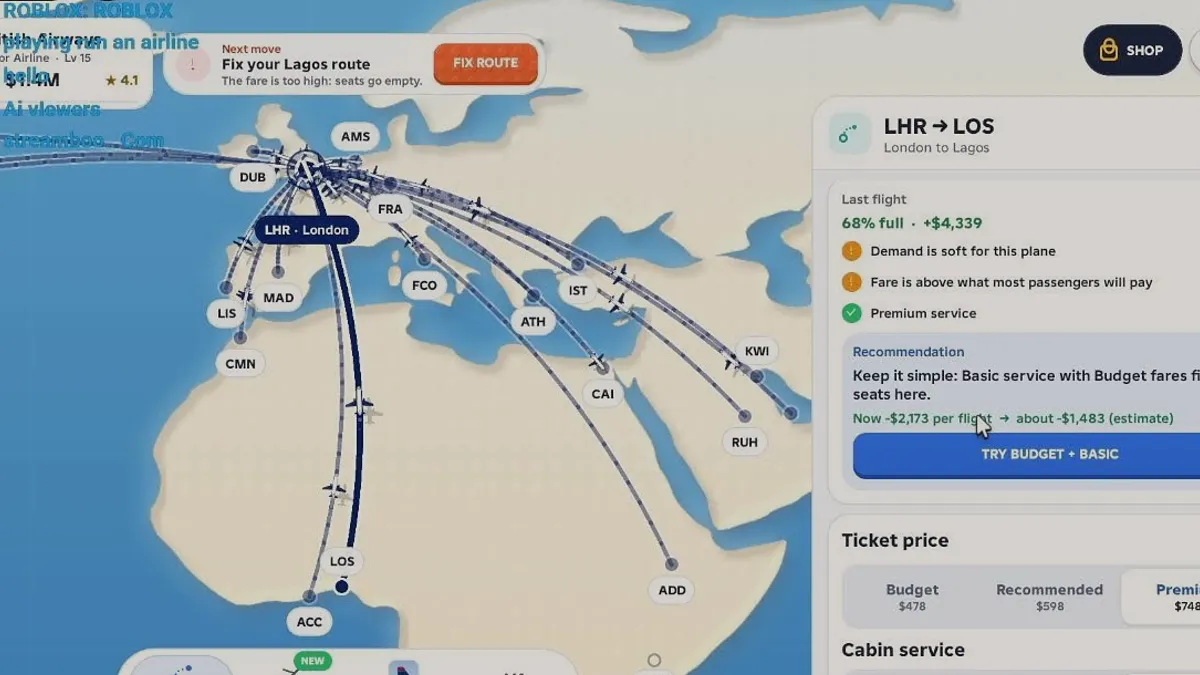
Those four values update during play. In the reviewed recordings a brand-new airline reached level 3 with 5.6 stars and $113K, then level 5 with 5.1 stars and $93.6K. A separate session showed a level 15 Major Airline at 4.1 stars.
Observed card states
| Target | Level and tier | Star rating | Cash at capture |
|---|---|---|---|
| Major airline | Level 15 · Major Airline | 4.1 | Not read |
| Early airline | Level 3 | 5.6 | $113K |
| Growing airline | Level 5 | 5.1 | $93.6K |
What the numbers imply
Level rises over time and is the clearest progression signal, but the rating falls as the airline grows in these observations. That is the opposite of what a simple 'better airline scores higher' model would predict.
A plausible reading is that rating tracks recent service quality — cabin service level, delays, or route outcomes — while level tracks cumulative activity. The reviewed data cannot confirm the mechanism, only the divergence.
What is not published
- Experience required per level.
- The tier labels and their level boundaries.
- The rating scale maximum and how it is weighted.
- Whether rating affects demand, fares or unlocks.
- Whether rating decays when the airline is idle.
Level and rating questions
How do I raise my level?
No threshold table is published. Level rose during ordinary play in the reviewed sessions, so completing flights and expanding the network is the only observed path.
Why did my rating drop?
The rating formula is unpublished. The most likely visible inputs are cabin service level and route outcomes, so check whether you recently cut service to basic on a route that used to run premium.
Does a low rating block anything?
No lock or penalty tied to rating was visible. The card displays it as a score, and the official description mentions rankings and awards without stating a rating gate.
Is the level cap known?
No cap is published. Level 15 is the highest state observed in the reviewed recordings, which is a floor on the cap rather than the cap itself.
Sources and references
- Run an airline — official Roblox experience page
Supports the game identity, creator, release date, server size, genre and the published feature list quoted on this site.
Accessed - Roblox Games API — universe 10768550253
Supports visit count, favourites, active players, maximum server size, genre tags and the created/updated timestamps used in the snapshot table.
Accessed - Roblox votes API — universe 10768550253
Supports the 1,432 up / 208 down vote counts behind the 87.3% approval figure. Approval is computed, not published by Roblox.
Accessed - Roblox game passes API — universe 10768550253
Supports the six pass names and the effect wording quoted in the monetisation pages. It does not publish prices.
Accessed - Creator profile — monkeytherobloxdev
Confirms the creator account behind the experience. The profile itself carries no studio or support page.
Accessed - RUN AN AIRLINE FOR THE FIRST TIME:O — Zzzenvy
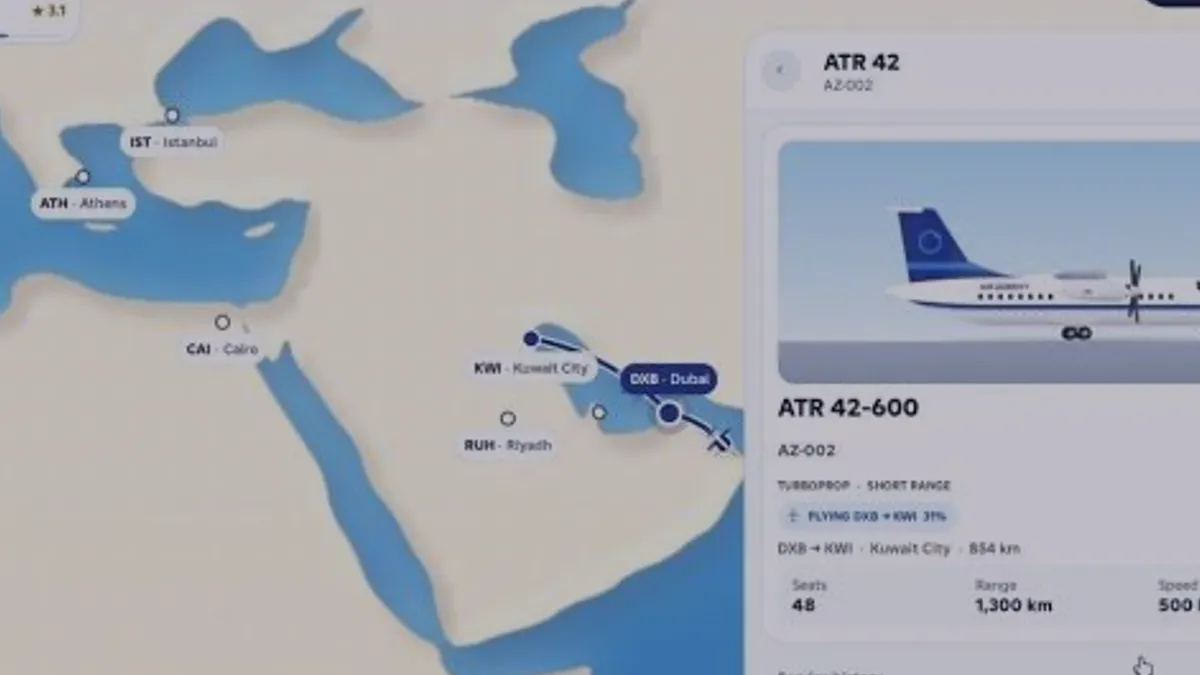
Public first-session recording used for the create-airline flow, the ATR 42-600 fleet panel (48 seats, 1,300 km, 500 km/h) and the DXB ↔ KWI 854 km / 3h example. Frame text only; no developer statement.
Accessed - ROBLOX playing run an airline — Krakenking17
Public live recording used for the LHR → LOS route card: fare tiers $478/$598/$748, 68% load, +$4,339 last flight, -$2,173 to -$1,483 recommendation, and cabin service at $3/$9/$20 per seat.
Accessed